Warmer weather in Pennsylvania means backyard barbecues, family gatherings, and outdoor cooking. Whether you’re firing up a gas grill, charcoal grill, smoker, or even a backyard fire pit, these activities come with real risks. Each year, thousands of people are treated for burns and grill-related injuries, many of which are preventable.
This guide will help you enjoy grilling season safely while reducing the risk of burns, fires, and serious injuries.
Why Grilling Safety Matters
According to the National Fire Protection Association, grills are involved in thousands of home fires annually, with peak incidents occurring during the summer months. Burns often happen quickly—from flare-ups, hot surfaces, or improper handling of fuel.
For injury prevention professionals and families alike, the takeaway is simple: small safety steps can prevent life-changing injuries.
Set Up Your Grill Safely
Location is your first line of defense against fires.
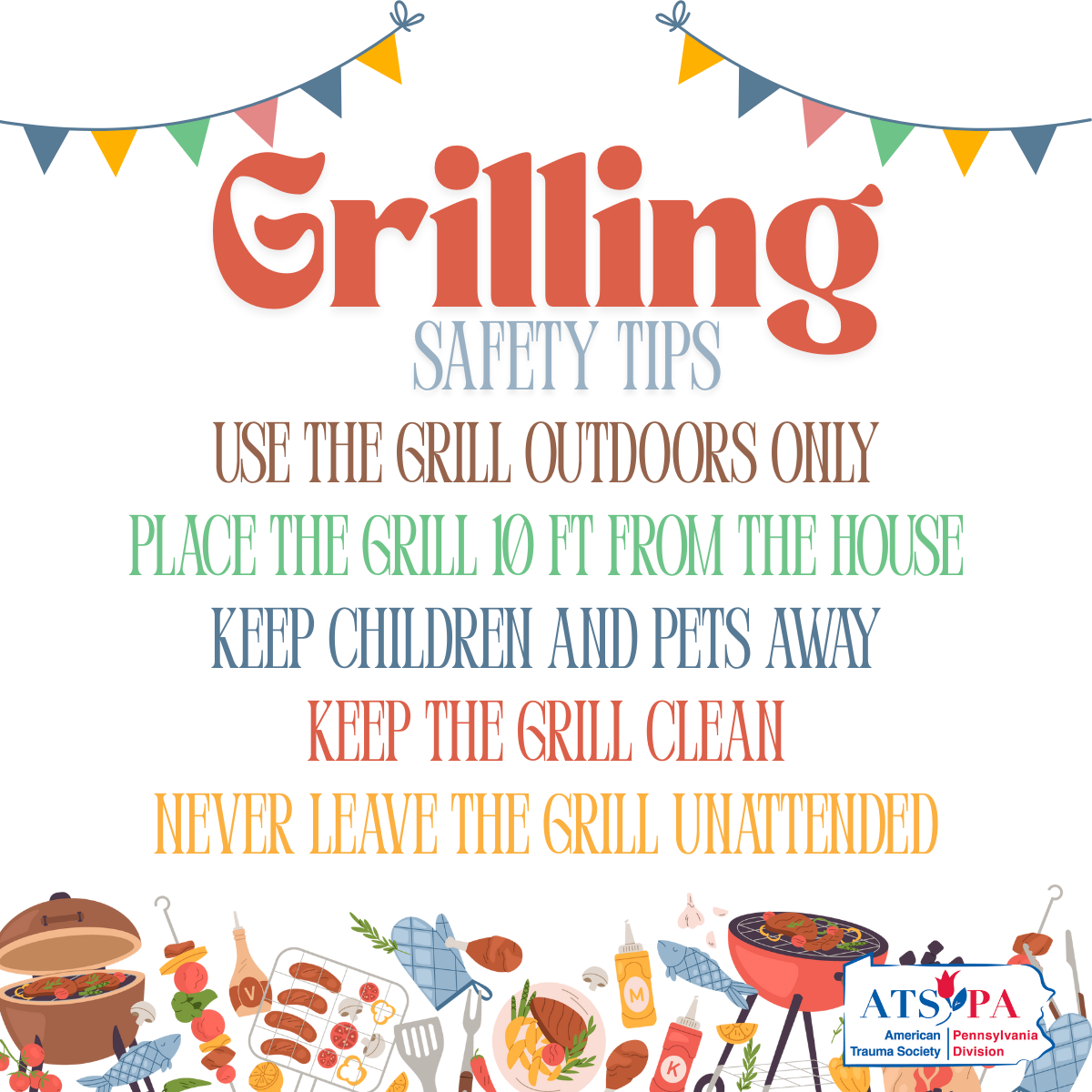
- Place grills at least 10 feet away from your home, deck railings, and overhangs
- Never use grills indoors or in enclosed spaces like garages or tents
- Keep grills away from dry leaves, mulch, and flammable materials
- Set up on a flat, stable surface to prevent tipping
Pro Tip: Wind can carry flames and embers. Be mindful of conditions before lighting up.
Safe Lighting Practices
Gas Grills
- Always open the lid before lighting
- If the grill doesn’t ignite right away, turn it off and wait several minutes before trying again
- Regularly check hoses for leaks (use a soap-and-water test)
Charcoal Grills
- Use only charcoal starter fluid—never gasoline or other accelerants
- Never add lighter fluid to an already lit fire
- Consider using a chimney starter for safer ignition
Stay Alert While Cooking
Grilling requires constant attention.
- Never leave a lit grill unattended
- Keep children and pets at least 3 feet away from the cooking area
- Use long-handled tools to prevent burns
- Wear short, tight-fitting sleeves or roll them up
Flare-ups can happen fast, especially with fatty foods, so stay close and in control.
Be Prepared for Emergencies
Even with precautions, accidents can happen.
- Keep a fire extinguisher nearby
- For small grease fires, smother flames with a lid or baking soda (never water)
- Know when to call for help (Dial emergency services if a fire spreads)
Prevent and Treat Burns
Burn injuries are one of the most common grilling-related incidents.
Prevention Tips
- Assume all grill surfaces are hot
- Use heat-resistant gloves when handling hot items
- Let coals and ashes cool completely before disposing
First Aid for Minor Burns
- Cool the burn under running water for 10–20 minutes
- Cover with a clean, dry cloth
- Avoid ice, butter, or ointments immediately after the burn
Seek medical attention for burns that are severe, cover large areas, or involve the face, hands, or joints.
Fire Pit & Outdoor Cooking Safety
Fire pits and camp-style cooking are increasingly popular—and risky if misused.
- Use fire pits only in approved outdoor areas
- Keep a water source or hose nearby
- Never leave fires unattended
- Fully extinguish fires before leaving or going to sleep
What NOT to Do
- Never grill indoors or on a balcony
- Never use water on grease fires
- Never leave children unsupervised near grills
- Never overload grills with fatty meats that can cause flare-ups
Make Safety Part of Your Summer Routine
At ATSPA, we believe injury prevention starts with awareness and action. Share these tips with your neighbors, include them in community programming, and make safe grilling part of every outdoor gathering.
Download: