
Communication Toolkits
Emergency Preparedness Toolkit
The Communications Toolkit for Injury Prevention Coordinators: Emergency Preparedness provides coordinated messaging, outreach strategies, and customizable resources to raise awareness about the importance of emergency preparedness in the event of unpredictable natural disasters and crises.
Target Audience: Parents, caregivers, faith communities, healthcare professionals and the general public.
Key Messages:
- Be informed and prepared: Know the top local threats (e.g., floods, fires, winter storms) and have a plan in place.
- Have a family emergency plan: Include evacuation routes, shelter-in-place locations, and communication strategies. Practice it regularly.
- Know emergency contacts: Keep a list of 9-1-1, local hospital, physician, and other key contacts. When calling, speak clearly, give the exact location, and don’t hang up until told to.
- Prepare emergency supplies: Include non-perishable food, water, first aid, medications, and important documents for at least three days.
Water Safety Toolkit
The Communications Toolkit for Injury Prevention Coordinators: Water Safety provides coordinated messaging, outreach strategies, and customizable resources to Reduce drowning and water-related injuries through prevention education, behavior change, and community engagement.
Target Audience: Parents, caregivers, educators, youth, faith communities, and the general public.
Key Messages:
- Drowning is fast, silent, and preventable
- Supervision saves lives—always designate a “Water Watcher”
- Life jackets save lives—especially in open water
- Swim skills are essential, but not a substitute for supervision
- Barriers + alarms help prevent unsupervised access to water
- Alcohol and water activities don’t mix
Poison Prevention Toolkit
The Communications Toolkit for Injury Prevention Coordinators: Poison Prevention provides coordinated messaging, outreach strategies, and customizable resources to raise awareness and promote poison prevention practices in Pennsylvania communities.
Target Audience: Parents, caregivers, faith communities, healthcare professionals and the general public.
Key Messages:
- Poisoning is preventable.
- Safe storage saves lives.
- Environmental hazards are often invisible.
- Substance-related poisonings require awareness, not stigma.
- Help is always available.
Firearm Injury Prevention Toolkit
The Communications Toolkit for Injury Prevention Coordinators: Firearm Injury Prevention provides coordinated messaging, outreach strategies, and customizable resources to raise awareness and promote safe firearm practices in Pennsylvania communities.
Target Audience: Parents, caregivers, educators, youth, faith communities, and the general public.
Key Messages:
- Firearm injuries are preventable.
- Safe storage saves lives.
- Talking about firearm safety is a sign of care, not conflict.
- You don’t need to own a gun to be part of the solution.
- Help is available: Mental health support and free gun locks exist in every community
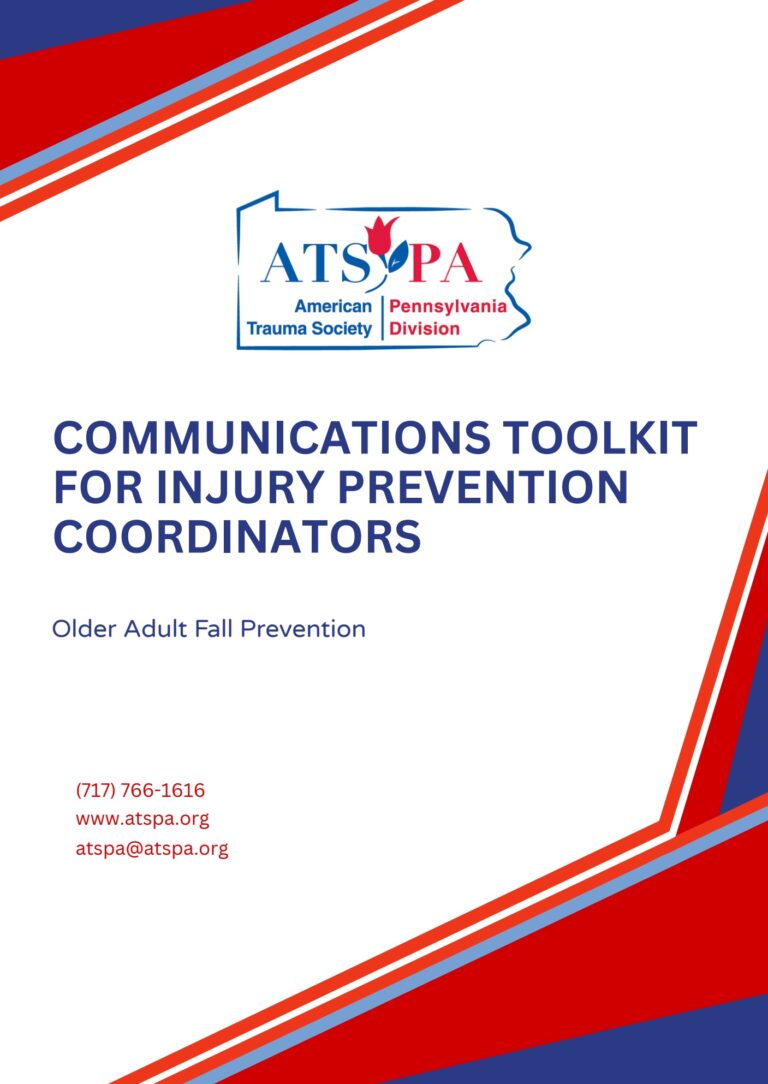
Fall Prevention Toolkit
The Communications Toolkit for Injury Prevention Coordinators: Older Adult Fall Prevention provides coordinated messaging, outreach strategies, and customizable resources to raise awareness and promote fall prevention practices in Pennsylvania communities.
Target Audience: Parents, caregivers, faith communities, healthcare professionals and the general public.
Key Messages:
- Falls are common, but preventable.
- Prevention starts with awareness and action.
- Communities and families play an important role.
- Falls can threaten independence, but prevention protects it.