For many children, summer means spending more time outdoors at parks, playgrounds, camps, and community recreation areas. Playgrounds provide important opportunities for physical activity, social development, and imaginative play. However, they can also be a source of preventable injuries if proper safety precautions are not followed.
Each year, thousands of children are treated for playground-related injuries, many involving falls. Parents, caregivers, schools, and community organizations all play a role in creating safer play environments.
Falls Are the Leading Cause of Playground Injuries
Most playground injuries occur when children fall from equipment such as:
- Monkey bars
- Climbing structures
- Swings
- Slides
While bumps and scrapes are common parts of childhood, falls can sometimes result in fractures, concussions, or other serious injuries.
The good news is that many injuries can be prevented through proper supervision, safe equipment, and age-appropriate play.
Choose Age-Appropriate Equipment
Children should use playground equipment designed for their age and developmental level.
For example:
- Younger children may lack the coordination and strength needed for taller climbing structures.
- Older children may become injured when attempting to use equipment designed for younger age groups in unintended ways.
Many playgrounds include designated play areas for different age ranges. Encourage children to use the spaces intended for them.
Check the Surface Below
The surface beneath playground equipment is just as important as the equipment itself.
Safer surfaces include:
- Engineered wood fiber
- Rubber mulch
- Rubber mats
- Loose-fill materials designed for playground use
Concrete, asphalt, grass, and packed dirt provide less protection during falls.
Parents should visually inspect play areas and report damaged or worn surfaces when they notice them.
Practice Active Supervision
Supervision remains one of the most effective injury prevention strategies.
Caregivers should:
- Stay where they can easily see children.
- Watch for unsafe behavior.
- Assist younger children when needed.
- Limit distractions from phones and other devices.
Being present and attentive allows adults to identify hazards before injuries occur.
Teach Playground Rules
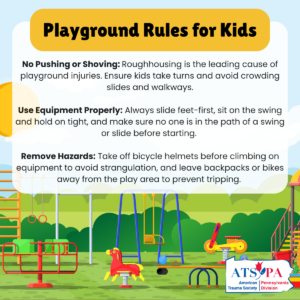
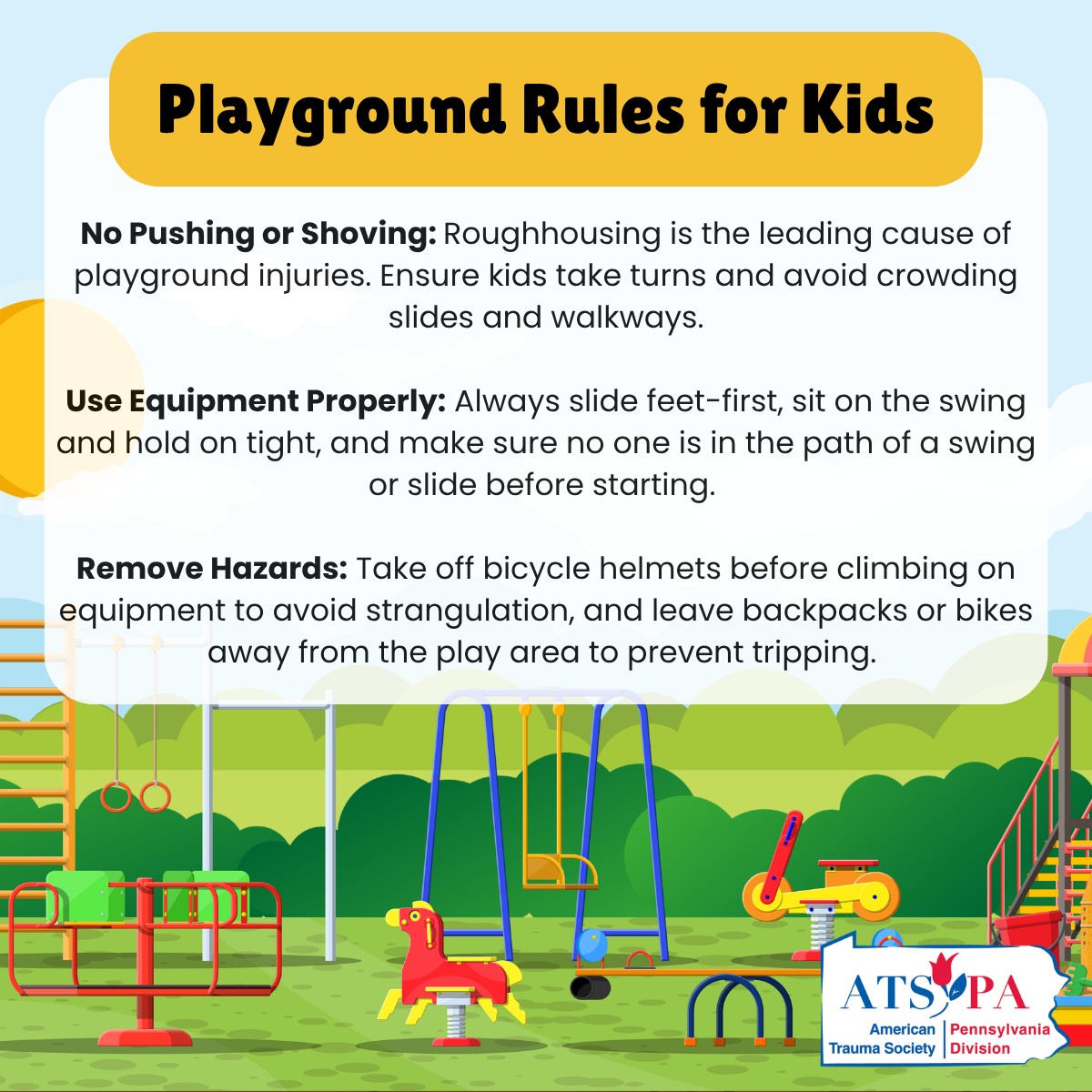
Simple safety rules can help reduce injuries.
Remind children to:
- Use equipment as intended.
- Wait their turn.
- Avoid pushing or roughhousing.
- Hold onto handrails and climbing equipment.
- Stay aware of others around them.
Children who understand playground expectations are less likely to engage in risky behavior.
Inspect Before Playing
Before children begin playing, take a quick look around.
Check for:
- Broken equipment
- Loose bolts or hardware
- Sharp edges
- Hot surfaces
- Tripping hazards
Summer temperatures can cause playground equipment, especially metal slides and handrails, to become extremely hot. Testing surfaces before play can help prevent burns.
Supporting Safe and Healthy Play
Playgrounds are valuable community spaces that encourage exercise, social interaction, and healthy development. By combining proper supervision, safe equipment, and age-appropriate play, families can help ensure that playgrounds remain places for fun—not preventable injuries.
This summer, take a few moments to review playground safety before your next visit. A safer playground experience helps children stay active, confident, and injury-free all season long.