Every June, communities across the country recognize Trailer Safety Week — a time dedicated to reminding drivers that safe towing practices save lives. Whether you are hauling a boat to the lake, towing a camper for summer vacation, transporting landscaping equipment, or moving recreational vehicles across Pennsylvania, trailer safety should never be an afterthought.
With summer travel season in full swing, June is one of the busiest months for towing-related travel. Unfortunately, it is also a time when preventable crashes involving trailers increase. Proper trailer maintenance, correct loading, and safe driving habits can help reduce injuries and keep Pennsylvania roadways safer for everyone.
Trailers that are improperly connected, overloaded, or poorly maintained can create serious hazards. Trailer sway, tire blowouts, detached trailers, and braking failures can quickly lead to devastating crashes.
According to roadway safety experts, common contributing factors in trailer-related incidents include:
- Improper hitch connections
- Uneven or excessive loads
- Underinflated or worn tires
- Lack of trailer brake maintenance
- Excessive speed while towing
- Driver inexperience
Towing changes how a vehicle accelerates, brakes, turns, and responds in emergencies. Even experienced drivers should review safety procedures before each trip.
Pennsylvania roads present additional towing challenges, including mountainous terrain, steep grades, narrow rural roadways, construction zones, and more.
Drivers traveling to popular summer destinations, lakes, campgrounds, and parks should be especially cautious during weekends and holiday travel periods. Drivers should also plan extra travel time and prioritize safety over speed.
Top Trailer Safety Tips
- Inspect Before Every Trip
Before hitting the road, conduct a complete trailer inspection:
- Check tire pressure and tread
- Test brake lights and turn signals
- Ensure safety chains are crossed properly
- Confirm hitch and coupler are secure
- Inspect straps and tie-downs
- Verify trailer brakes are functioning
A few minutes of inspection can prevent a major incident.
- Load the Trailer Properly
Improper loading is one of the leading causes of trailer sway and rollover crashes.
Safe loading practices include:
- Place heavier items low and centered
- Distribute weight evenly
- Secure all cargo
- Avoid overloading beyond weight limits
- Maintain proper tongue weight
If cargo shifts while driving, vehicle handling can become dangerous very quickly.
- Slow Down
Towing requires more stopping distance and reduced speeds.
Drivers should:
- Increase following distance
- Brake earlier
- Take turns wider
- Avoid sudden steering movements
- Reduce speed during rain or high winds
Speeding while towing greatly increases the risk of sway and loss of control.
- Watch for Trailer Sway
If trailer sway occurs:
- Stay calm
- Do not slam on the brakes
- Ease off the accelerator
- Keep steering straight
- Gradually slow down
Many newer towing systems include sway control technology, but safe loading and speed remain the best prevention methods.
- Make Sure Your Vehicle Can Tow Safely
Not every vehicle is designed to tow every trailer.
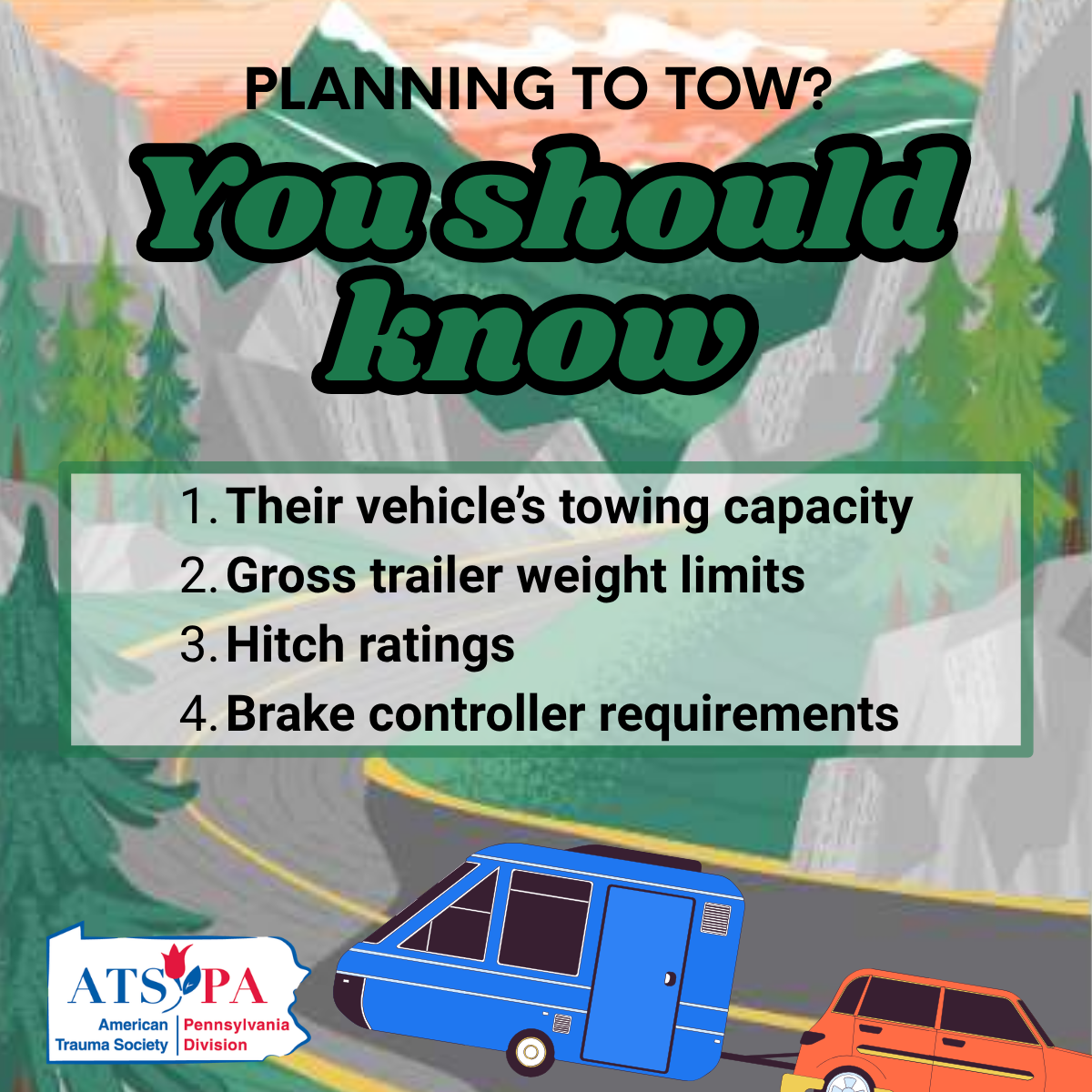
Drivers should know:
- Their vehicle’s towing capacity
- Gross trailer weight limits
- Hitch ratings
- Brake controller requirements
Exceeding towing capacity places stress on brakes, suspension systems, and tires, increasing crash risk.
Drivers who are not towing also play a role in safety:
- Avoid cutting closely in front of towing vehicles
- Give trailers extra room when merging
- Pass carefully
- Expect wider turns and slower stopping
Patience can help prevent collisions.
Trailer Safety Week serves as an important reminder that preparation matters. Safe towing protects not only the driver and passengers, but everyone sharing the road.
Before your next summer trip, take time to inspect your trailer, review towing procedures, and ensure your equipment is road-ready. Small safety checks can prevent serious injuries and save lives.
For more roadway injury prevention resources and seasonal safety information, visit American Trauma Society, Pennsylvania Division.