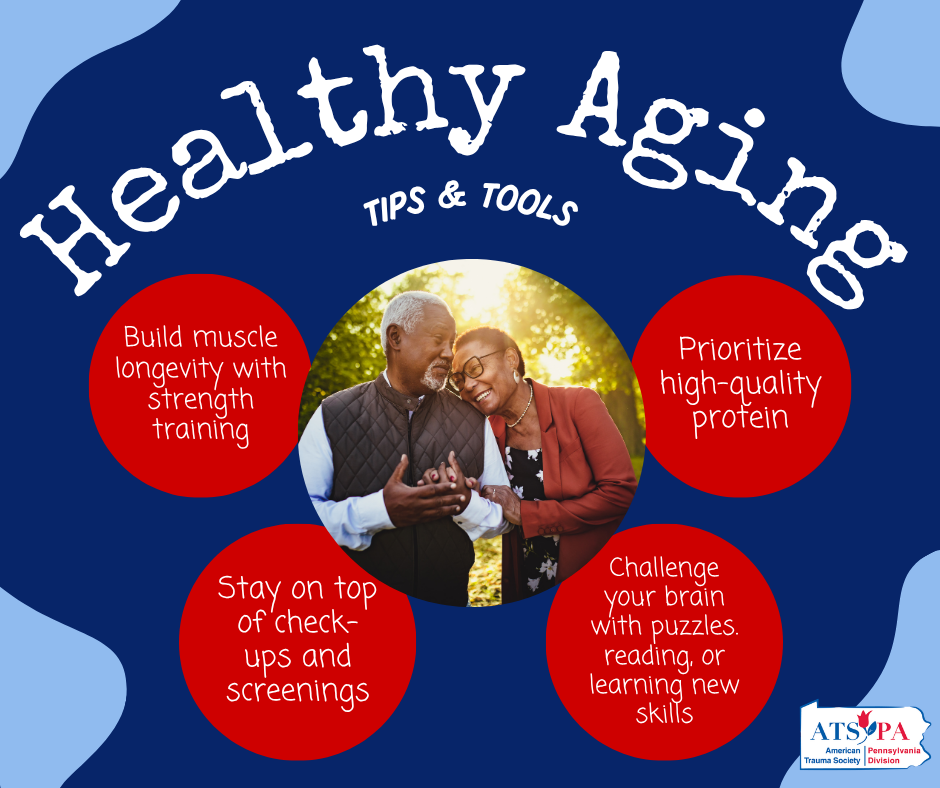
Every September, Healthy Aging Month draws attention to the positive aspects of growing older and encourages individuals to take an active role in their health and well-being. Healthy aging is about more than physical health. It includes maintaining independence, building and strengthening social connections, supporting mental well-being, pursuing personal interests, and continuing to learn and grow throughout life.
Independence is an important part of healthy aging. Staying independent can mean making your own choices, remaining involved in your community, managing daily activities, maintaining relationships, and continuing to pursue the things that bring meaning to your life. Taking steps to support your physical, mental, social, and financial well-being can help you maintain independence and quality of life as you age.
This year, embrace the idea that curiosity has no age limit. Trying something new, exploring an unfamiliar place, learning a new skill, or simply asking questions can help keep life engaging and meaningful at any age.
Staying curious can also encourage independence. Learning new skills, staying active, exploring new interests, and finding ways to adapt to change can help you remain confident and engaged in everyday life. Healthy aging does not mean stopping or slowing down, it means continuing to find ways to participate, make choices, and do the things that matter to you.
Ten Ways to Celebrate “Curiosity Has No Age Limit”
1. Learn Something New
Take a class, attend a workshop, watch a tutorial, or explore a subject that has always interested you. Learning does not have to stop with age; there is always something new to discover.
Learning new skills can also help support independence. Whether it is learning how to use new technology, manage a household task, or develop a new hobby, continuing to learn can build confidence and help you adapt to changes throughout life.
2. Try a New Physical Activity
Staying active can benefit many aspects of aging. Consider walking, pickleball, yoga, tai chi, swimming, dancing, or another activity that challenges you in a positive way. Talk with a health care professional if you have questions about starting a new activity or want to build your balance, strength, and flexibility.
Regular physical activity can help support strength, balance, and mobility which can help aid in less falls, playing an important role in maintaining independence and making everyday activities easier. Programs like A Matter of Balance (MOB) and Bingocize® empower individuals to improve their strength, safety, and confidence of older adults across Pennsylvania.
3. Explore Your Community
Visit a museum, park, historic site, restaurant, or neighborhood you have never experienced before. You do not have to travel far to find something new. Exploring familiar places in new ways can spark curiosity and create new experiences.
Staying connected to your community can also support independence by helping you remain engaged with the people, activities, and resources around you.
Bonus Tip: Pretend you are visiting your city for the first time. What advice would you give a tourist?
4. Read Outside Your Comfort Zone
Choose a book, magazine, or article about a topic you know little about. Reading can introduce you to new perspectives, ideas, cultures, and interests while keeping your mind engaged.
Keeping your mind active and continuing to learn can help you stay engaged in the world around you and make informed decisions about your life.
Bonus Tip: Don’t like to read? Try a cross word, word search, or sodoku. These activities stretch your mind and keep you mentally sharp.
5. Connect With People of Different Generations
Meaningful conversations with people of different ages can provide fresh perspectives and new ideas. Sharing experiences and learning from one another can strengthen social connections while creating opportunities to see familiar topics from a different point of view.
Strong social connections can also help combat isolation and create a network of people who can offer encouragement, information, and support when needed, while still allowing you to maintain your own interests and choices.
Bonus Tip: Connecting with family is also a great opportunity to discuss healthcare. Having a loved one help to manage your health can make the task seem less daunting and confusing.
6. Embrace Technology
Technology can provide new ways to learn, connect, and explore. Challenge yourself to learn how to use a new app, device, or online tool that could make everyday life easier or more enjoyable.
Technology can also support independence by making it easier to communicate with loved ones, access information, manage schedules, stay connected to your community, and navigate everyday tasks.
Bonus Tip: Try using an app to track your physical activity, store a list of your medications, or simply remind you of your next doctor’s appointment. Just remember that online safety rules still apply.
7. Pursue a Creative Interest
Write, paint, photograph, cook, garden, craft, or make music simply for the joy of learning and creating. Creative activities provide an opportunity to explore new interests without worrying about being perfect.
Having hobbies and personal interests can help maintain a sense of purpose and identity. Healthy aging is not just about staying healthy; it is also about continuing to do the things that make life meaningful.
8. Be Open to Change
Being willing to ask questions and accept change can also help you make better decisions about your health, safety, and everyday life. Injury prevention starts with the openness to knowledge and awareness, and making necessary changes to your lifestyle and living space can help maintain that.
- Removing any loose area rugs, cords, furniture or other objects which could pose tripping hazards. If you use rugs, secure them to the floor with double-sided tape or replace them with slip resistant rugs.
- Improving the lighting throughout your home. Nightlights are a great tool to use in every room, especially those frequented at night.
- Placing items you use frequently within easy reach.
- Using slip resistant bathmats. If needed, use a shower chair and install grab bars in the shower and next to the toilet.
- Installing handrails at the stairs and walkways and using them.
Bonus Tip: Your local trauma center or EMS agency may be able to help adapt your home for safety. Reach out to them and let them know you are looking for resources to stay in your home safely and independently.
9. Revisit an Old Dream
Think about a hobby, destination, skill, or goal you have always wanted to pursue. It is never too late to return to an old interest or discover a new way to make it part of your life.
Setting personal goals can provide a sense of purpose and give you something to work toward. Independence means having the freedom to continue pursuing the activities and goals that are important to you.
10. Say Yes to a New Experience
Growth often begins when we step outside familiar routines. Try something different, meet someone new, volunteer, attend a community event, or participate in an activity you have never considered before.
New experiences can build confidence, strengthen social connections, and encourage you to remain active and involved in your community.
Independence Is Part of Healthy Aging
Healthy aging looks different for everyone. For some people, independence may mean continuing to live in their own home and manage daily responsibilities. For others, it may mean staying active in their community, continuing to work or volunteer, managing their finances, maintaining relationships, or making their own health and lifestyle decisions.
Maintaining independence does not mean doing everything alone. Knowing when to ask for help is also a part of healthy aging. Family members, friends, health care professionals, community organizations, and other support systems can provide assistance while still allowing older adults to remain involved in decisions about their own lives.
Planning ahead can also help protect independence. Staying physically active, maintaining social connections, keeping up with health needs, managing finances, learning new skills, and making appropriate changes to the home can all help individuals prepare for changes that may come with aging.
Keep Growing, Keep Exploring
Healthy aging is an ongoing journey. Taking an active role in your physical, social, mental, and financial well-being can help support independence and quality of life as you grow older.
This Healthy Aging Month, remember curiosity does not have an expiration date. Stay active. Stay connected. Keep learning. Keep exploring. And never stop discovering what is possible.
For a PDF — Click Here