Each year, Drowsy Driving Week is observed in November to highlight drowsy driving. Often overlooked compared to drunk or distracted driving, drowsy driving is a dangerous public health issue. According to the AAA Foundation for Traffic Safety, drowsy driving causes thousands of car crashes each year and kills an estimated 6,400 people in the U.S. alone. For individuals and families across Pennsylvania, prevention is essential.
Why Does This Matter?
When you drive without adequate sleep, your motor skills are seriously impaired. Many people understand the risks of drowsy driving, but overlook them and continue to operate motor vehicles. Sleep deprivation not only negatively affects overall physical and mental health, but it can also lead to serious injuries. Prioritizing adequate sleep before operating any vehicle is crucial to keep yourself and everyone else on the road safe.
The Risks of Drowsy Driving
- Reduced alertness and attention: Fatigue makes it harder to notice hazards or changes in traffic.
- Slower reaction time: Sleepiness delays responses needed to avoid collisions.
- Impaired decision‑making: Poor judgment increases risky behaviors on the road.
- Microsleeps: Brief involuntary lapses in consciousness can cause complete loss of vehicle control.
- Crash severity: One‑third of drowsy‑driving crashes result in injuries, and more than 17% of fatal crashes involve fatigue.
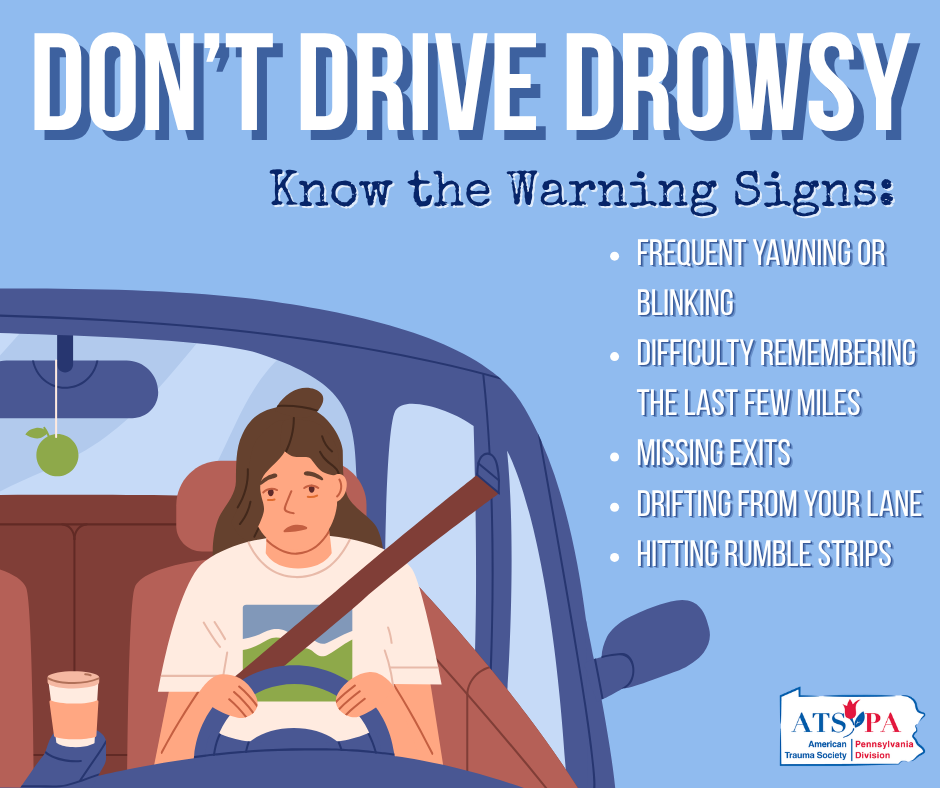
Common Warning Signs
- Frequent yawning or blinking
- Difficulty remembering the last few miles
- Missing exits
- Drifting from your lane
- Hitting rumble strips
Who’s Most at Risk for Drowsy Driving
- Drivers who get less than 7 hours of sleep
- Shift workers and night‑shift employees.
- Commercial drivers (trucks, buses)
- Teen and young adult drivers
- People with untreated sleep disorders (e.g., sleep apnea)
- Drivers using sedating medications
Prevention Starts Early
Injury prevention starts with knowledge and awareness. Avoid drowsy driving altogether by getting 7-9 hours of sleep before driving and taking 20-30 minute naps when needed. For longer trips, avoid driving between midnight and 6 a.m. or late afternoon when fatigue peaks and stop at rest areas during long trips.
Fatigue has costly effects on the safety, health, and quality of life of the American public. Whatever causes fatigue, the negative outcomes are the same. These include impaired cognition and performance, motor vehicle crashes, workplace accidents, and health consequences. Stay aware, awake, and safe.
For a PDF — Click Here