From the mountains of northcentral Pennsylvania to the farms and forests that define much of our state, all-terrain vehicles (ATVs) and utility terrain vehicles (UTVs or “side-by-sides”) have become a way of life for many families. They’re used for recreation, hunting, farming, trail riding, and getting work done around the property.
But while these vehicles are built for off-road adventures, they are not toys.
Every year, Pennsylvanians suffer serious—and sometimes fatal—injuries in ATV and UTV crashes. Many of these incidents involve preventable factors such as excessive speed, lack of helmets, carrying passengers on single-rider ATVs, impaired riding, or children operating vehicles that are too large for them.
Whether you’re heading out for a weekend trail ride or using a UTV around the farm, a few simple safety habits can help protect you, your family, and your community.
ATV vs. UTV: What’s the Difference?
Although they’re often grouped together, ATVs and UTVs are designed differently.
ATVs (All-Terrain Vehicles) typically:
- Are designed for a single rider.
- Use handlebars for steering.
- Require riders to shift their body weight for balance.
- Should not carry passengers unless specifically designed by the manufacturer.
UTVs (Utility Terrain Vehicles or Side-by-Sides) typically:
- Have steering wheels and foot pedals.
- Include side-by-side seating.
- Are equipped with seat belts and rollover protective structures (ROPS).
- May safely carry passengers only if there is a designated seat and seat belt for each occupant.
Understanding your vehicle’s design is the first step toward riding safely.
ATV and UTV Injuries Are Often Severe
ATVs and UTVs are heavier, faster, and more powerful than many people realize. Rollovers, ejections, and collisions can happen in seconds, especially on uneven terrain or at higher speeds.
According to the U.S. Consumer Product Safety Commission, hundreds of people die and tens of thousands are treated in emergency departments each year for ATV-related injuries nationwide. Children and teenagers account for a disproportionate share of these injuries because they often lack the size, strength, judgment, and experience needed to safely operate adult-sized machines.
In Pennsylvania, ATV crashes are serious enough that state law requires operators to report crashes and other incidents involving injury, death, or more than $100 in property damage within seven days.
Pennsylvania ATV Laws Every Rider Should Know
Pennsylvania has specific laws designed to improve rider safety.
Some important requirements include:
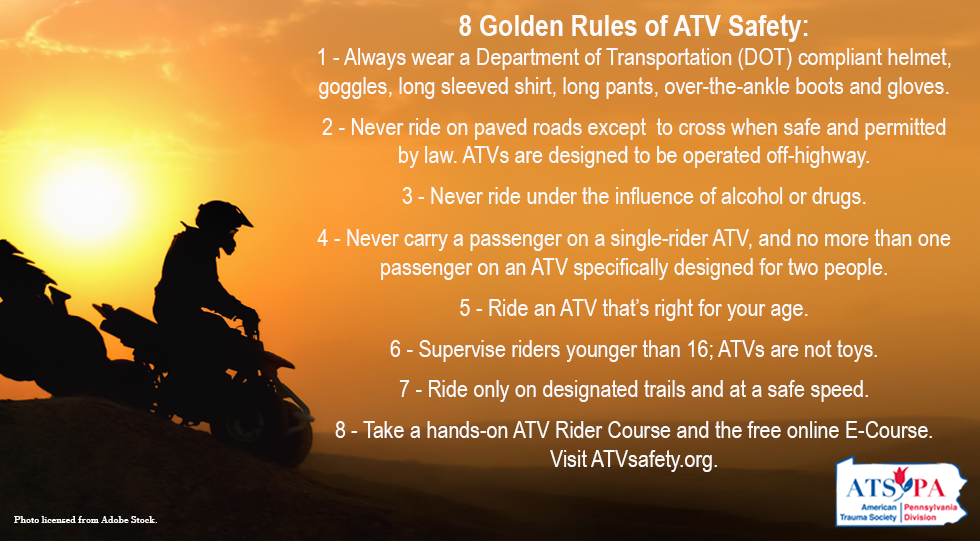
- Helmets are mandatory. It is illegal to operate or ride an ATV in Pennsylvania without a securely fastened helmet that meets safety requirements.
- Children under age 8 may not operate an ATV on state-owned land.
- Youth ages 8–15 must complete an approved ATV safety course and obtain a safety certificate before riding anywhere other than property owned or leased by a parent or guardian.
- Stay on designated trails and obtain permission before riding on private property.
- Riders must carry required registration and insurance documentation when applicable.
Even when riding on private land, following these safety practices can help prevent devastating injuries.
Parents: Size Matters More Than Age
One of the biggest mistakes families make is allowing children to operate adult-sized ATVs.
Children often:
- Cannot comfortably reach the controls.
- Lack the strength to maneuver heavy vehicles.
- Have slower reaction times.
- May not recognize hazardous terrain or changing conditions.
Choose a vehicle that matches your child’s size, age, and skill level, and always provide direct adult supervision.
Just because a child can reach the throttle doesn’t mean they can safely control the machine.
Helmets Save Lives
Head injuries remain one of the leading causes of death and permanent disability in ATV crashes.
Every rider, every time, should wear:
- A DOT-approved helmet.
- Eye protection or a face shield.
- Long sleeves and long pants.
- Over-the-ankle boots.
- Gloves.
Helmets dramatically reduce the risk of severe head injury during rollovers, collisions, and ejections.
Remember: the ride around the farm or down the trail is not “too short” for a helmet.
Ride the Right Way
Many crashes occur because riders exceed their abilities or underestimate changing terrain.
Ride safely by:
- Traveling at speeds appropriate for trail and weather conditions.
- Slowing before hills, curves, and blind corners.
- Avoiding paved roads whenever possible.
- Never riding under the influence of alcohol or drugs.
- Riding with another person nearby whenever possible and letting someone know your planned route.
- Inspecting brakes, tires, steering, and lights before every ride.
Safe riding starts long before the engine does.
ATVs Are Not Built for Passengers
One of the most common—and dangerous—mistakes is carrying passengers on a single-rider ATV.
Extra passengers:
- Shift the vehicle’s center of gravity.
- Make steering more difficult.
- Increase rollover risk.
- Reduce the operator’s ability to shift body weight.
If the manufacturer designed the ATV for one rider, keep it that way.
For UTVs, every occupant should:
- Sit in a designated seat.
- Wear their seat belt.
- Keep hands, arms, feet, and legs inside the vehicle while it is moving.
Farm and Rural Safety
Across Pennsylvania, many families rely on ATVs and UTVs for work around farms, orchards, hunting camps, and large rural properties.
Even experienced operators should remember:
- Children should never ride on equipment not designed for passengers.
- Never allow children to drive while carrying tools, equipment, or livestock feed.
- Be cautious on steep hillsides and soft ground.
- Slow down near ponds, streams, ditches, and embankments.
- Watch for hidden hazards such as rocks, wire fencing, tree roots, and washouts.
Work vehicles can become recreation vehicles in an instant—but the risks remain the same.
Before Every Ride: Perform a Safety Check
Take two minutes to inspect your vehicle before heading out.
✔ Check tire pressure.
✔ Test the brakes.
✔ Ensure the throttle moves freely.
✔ Confirm lights are working if you’ll ride near dusk.
✔ Inspect fuel and fluid levels.
✔ Verify that helmets and protective gear are in good condition.
✔ Make sure every rider understands the planned route.
A quick inspection can prevent a mechanical failure that leads to a serious crash.
Ride Smart. Ride Safe.
ATVs and UTVs provide recreation, transportation, and practical utility for thousands of Pennsylvania families. With the right training, proper equipment, and responsible riding habits, they can be enjoyed safely.
Whether you’re exploring Pennsylvania’s trail systems, working on the farm, or heading to your hunting camp, remember that injury prevention begins before the first mile.
Your ATV & UTV Safety Checklist
Before your next ride, ask yourself:
- Am I wearing a properly fitted DOT-approved helmet?
- Is my vehicle the right size for the rider?
- Have I completed a pre-ride safety inspection?
- Am I riding only where permitted?
- Am I traveling at a safe speed for the terrain?
- Is every UTV passenger wearing a seat belt?
- Have I left my route and expected return time with someone?
A safe ride isn’t just about reaching your destination—it’s about making sure everyone returns home safely.
Whether you’re riding for work or recreation, make safety your first stop. Wear your helmet, know Pennsylvania’s laws, ride within your limits, and encourage every member of your family to do the same.
For a PDF – Click Here