Fireworks are a favorite part of summer celebrations, especially around Memorial Day, Independence Day, and Labor Day. While fireworks can create unforgettable memories, they also pose serious risks. Every year, thousands of people across the United States — including many in Pennsylvania — are injured by fireworks-related burns, explosions, and fires.
According to the U.S. Consumer Product Safety Commission (CPSC), an estimated 14,700 people were injured by fireworks in 2024, a significant increase from previous years. Eleven fireworks-related deaths were also reported nationwide.
Children and teens are especially vulnerable:
- Nearly one-third of fireworks injuries involve children under age 15.
- Teens ages 15–19 experience some of the highest injury rates.
- Hands, fingers, eyes, face, and ears are the most commonly injured body parts.
In addition to injuries, fireworks also cause thousands of fires every year:
- Fireworks caused more than 31,000 fires in the United States in 2022.
- These fires resulted in approximately $109 million in property damage.
In Pennsylvania, consumer fireworks are legal for adults 18 and older, but state law places important restrictions on when and where they can be used.
Fireworks may NOT be used:
- Within 150 feet of an occupied building or vehicle
- While under the influence of alcohol or drugs
- Inside or from a vehicle or building
- In a way that targets another person
- On many public lands, including state parks and forests
Local municipalities may also have stricter ordinances, so residents should always check local regulations before using fireworks.
The Pennsylvania Office of the State Fire Commissioner reminds Pennsylvanians that most wildfire incidents in the state are caused by human activity — including fireworks misuse.
Before lighting the fuse this season, take a few minutes to learn how to keep yourself, your family, and your community safe.
Common Fireworks Injuries
Emergency departments often see a spike in injuries around the Fourth of July and New Year’s celebrations. Common injuries include:
- Burns – Burn injuries are the most frequent fireworks-related injury. Sparklers alone can burn at temperatures around 2,000°F — hot enough to melt some metals.
- Hand and Finger Injuries – Improper handling of fireworks can cause severe lacerations, fractures, or amputations.
- Eye Injuries – Flying debris and sparks can lead to permanent vision damage or blindness.
- Hearing Damage – Loud explosions can cause temporary or permanent hearing loss, especially in children.
In addition to potential injuries, fireworks can ignite homes, garages, dry grass, vehicles, and clothing within seconds. The safest way to enjoy fireworks is by attending a professional community display.
If you choose to use consumer fireworks, follow these important safety tips:
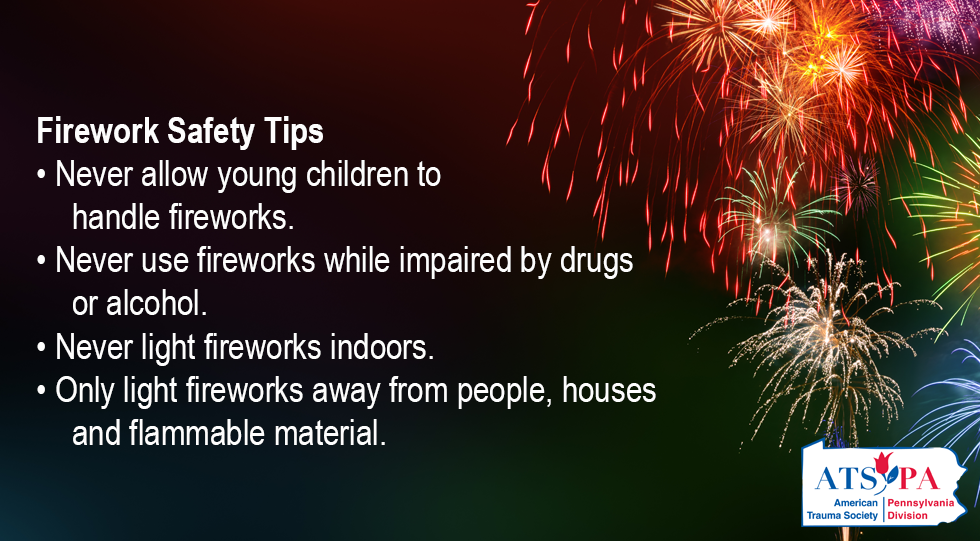
- Never Let Children Handle Fireworks – Even sparklers can cause severe burns. Young children should never handle fireworks.
- Keep Water Nearby – Always have a hose, bucket of water and/or fire extinguisher readily available.
- Light One Firework at a Time – Move away quickly after lighting.
- Never Relight a “Dud” – If a firework fails to ignite:
- Wait at least 5–10 minutes
- Soak it completely in water
- Dispose of it safely
- Do Not Hold Fireworks in Your Hand – This includes sparklers, Roman candles, and other handheld devices.
- Avoid Alcohol and Fireworks – Alcohol impairs judgment and reaction time, increasing the risk of serious injury.
- Protect Pets – Fireworks can trigger anxiety and panic in animals. Keep pets indoors in a quiet, secure area.
- Wear Eye Protection – Safety glasses can help reduce the risk of serious eye injuries.
Fireworks can affect more than just physical safety. Veterans, trauma survivors, and individuals with sensory sensitivities may experience anxiety or distress during fireworks displays. Fireworks also release smoke and chemicals into the air, which can worsen asthma and respiratory conditions.
Safe Alternatives to Consumer Fireworks
Families looking for safer celebration options can consider:
- Glow sticks
- LED light toys
- Confetti poppers
- Community firework displays
- Drone light shows
- Laser light displays
Fireworks can be exciting, but safety should always come first. Most fireworks injuries are preventable with proper precautions, adult supervision, and responsible decision-making.
This summer, celebrate in a way that protects your family, your neighbors, your pets, and your community.
For more Pennsylvania fireworks safety information, visit the Pennsylvania Office of the State Fire Commissioner Fireworks Safety Page.